
Unveiling the Lattice ISPLSI1016-60LJI: A Comprehensive Analysis of an In-System Programmable High-Density PLD
The landscape of digital logic design was profoundly shaped by the advent of Programmable Logic Devices (PLDs), which offered a flexible alternative to fixed-function integrated circuits. Among the key players in this revolution was Lattice Semiconductor, whose In-System Programmable (ISP) technology became a cornerstone for rapid prototyping and complex system design. The Lattice ISPLSI1016-60LJI stands as a quintessential example of this era, embodying the power of high-density programmability in a single package.
At its core, the ISPLSI1016 is a High-Density Programmable Logic Device built upon Lattice's proprietary architecture. The "1016" denotes its generic logic capacity, equivalent to approximately 2,000 PLD gates, making it suitable for a wide range of applications from glue logic integration to more complex state machine control. The architecture is composed of a series of Generic Logic Blocks (GLBs) interconnected by a global routing pool (GRP). Each GLB contains programmable macrocells that can be configured for combinatorial or registered logic functions. This structure provides a balanced mix of flexibility and predictable timing, a critical factor for designers.
The most defining feature of this device, as highlighted by its "ISPLSI" family name, is its In-System Programmability (ISP). Unlike earlier PLDs that required physical removal from a circuit board for erasing and reprogramming (often using UV light), the ISPLSI1016-60LJI can be reconfigured in-situ via a standard 5-wire JTAG (IEEE 1149.1) interface. This capability drastically accelerated development cycles, allowed for field upgrades, and simplified hardware debugging and testing, solidifying its role in modern electronic design workflows.
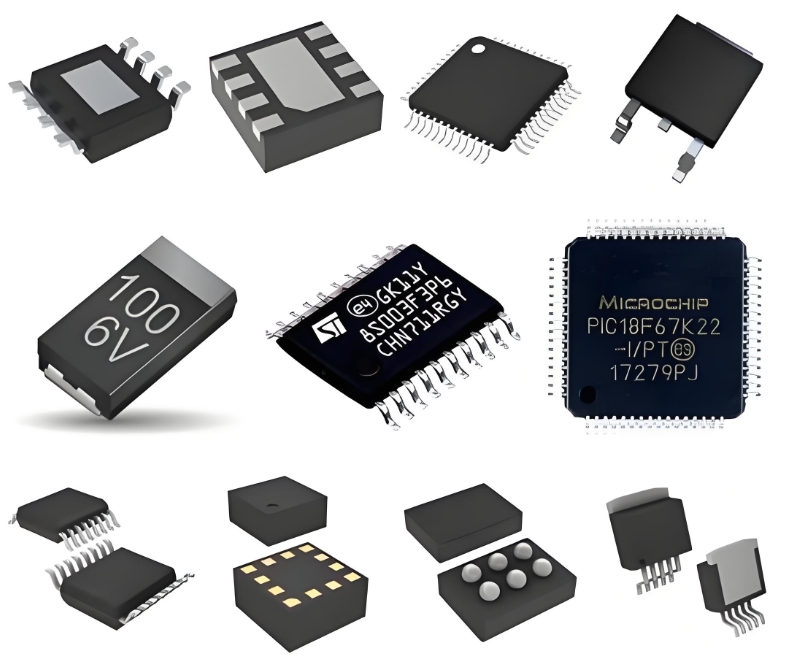
The part number suffix "-60LJI" provides specific details about the component. The "-60" indicates a maximum pin-to-pin delay of 6.0 ns, signifying a high-speed performance for its time. The "LJ" denotes a 44-pin Plastic Leaded Chip Carrier (PLCC) package, a common surface-mount format. Finally, the "I" specifies an industrial operating temperature range (-40°C to +85°C), making the device robust enough for a variety of demanding environments beyond commercial use.
The device is non-volatile, meaning the programmed logic pattern is retained even when power is removed. This is achieved through E²CMOS® (Electrically Erasable CMOS) technology, which combines the reconfigurability of CMOS with the non-volatile storage element of EEPROM. This eliminates the need for an external boot PROM, simplifying board design and reducing component count.
In application, the ISPLSI1016 was extensively used for address decoding, bus interfacing, DMA control, and memory mapping in microprocessor-based systems. Its ability to integrate dozens of discrete TTL logic chips into a single, reprogrammable device made it invaluable for reducing board space, improving reliability, and lowering overall system costs.
ICGOOODFIND: The Lattice ISPLSI1016-60LJI is a landmark high-density PLD that helped popularize in-system programmability. Its blend of a robust logic fabric, non-volatile E²CMOS technology, and standard JTAG interface established a powerful paradigm for flexible digital design, influencing countless embedded systems and leaving a lasting legacy in the evolution of programmable logic.
Keywords: In-System Programmability (ISP), High-Density PLD, Generic Logic Block (GLB), E²CMOS Technology, JTAG Interface.

