
Designing a High-Efficiency Buck Converter Using the onsemi NCP3063BMNTXG
The demand for efficient power management is paramount in modern electronic design, especially for battery-operated and thermally constrained applications. The onsemi NCP3063BMNTXG presents itself as a robust and versatile solution, a monolithic fixed-frequency switching regulator ideally suited for designing high-efficiency step-down (buck) converters. This article outlines the key design considerations and advantages of utilizing this IC.
The NCP3063 is a highly integrated component, featuring an internal NPN power switch capable of handling up to 1.5A of output current. Its operation at an oscillation frequency of 150 kHz (for the "B" version) allows for a compact design by enabling the use of smaller-valued inductors and capacitors. A critical feature for efficiency is its low standby current, which is crucial for extending battery life in portable devices.
A typical buck converter circuit using the NCP3063 requires a minimal number of external components. The design process revolves around selecting the correct values for the inductor (L1), output capacitor (Cout), and the feedback resistor divider (R1 and R2).
Inductor Selection: The inductor value is chosen based on the desired output voltage, input voltage range, and the maximum ripple current. A value between 33µH and 100µH is common for many applications. The inductor must have a saturation current rating significantly higher than the peak switch current to avoid efficiency losses and potential core saturation.
Output Capacitor Selection: The output capacitor is vital for filtering the output ripple voltage and ensuring loop stability. Low-ESR (Equivalent Series Resistance) tantalum or ceramic capacitors are preferred to minimize output voltage ripple and improve transient response. A value in the range of 100µF to 470µF is typical.
Setting Output Voltage: The output voltage is set by a simple resistor divider network connected to the feedback pin (FB). The relationship is given by Vout ≈ 1.25V (1 + R1/R2), where 1.25V is the internal reference voltage. Choosing resistor values in the kilo-ohm range optimizes for both low quiescent current and noise immunity.
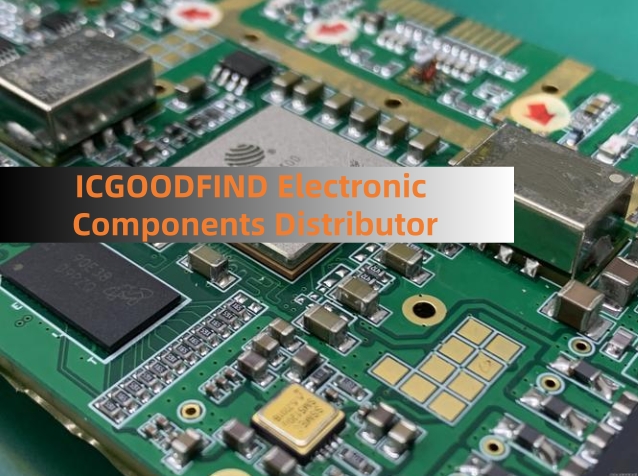
Enhancing Efficiency: To achieve high-efficiency operation, particular attention must be paid to the choice of the catch diode (D1). A Schottky diode is highly recommended due to its low forward voltage drop, which minimizes power loss during the switch's off-time, thereby boosting overall converter efficiency. Furthermore, proper PCB layout is critical; this includes using short, wide traces for high-current paths, placing the feedback network away from noisy switching nodes, and using a ground plane to reduce noise.
The NCP3063 also incorporates valuable protection features such as current limiting and thermal shutdown, safeguarding the IC and the load under fault conditions like output short-circuits or excessive power dissipation.
ICGOODFIND: The onsemi NCP3063BMNTXG is an excellent choice for designers seeking to build a cost-effective, reliable, and high-efficiency buck converter. Its integrated design simplifies the development process while its performance characteristics make it suitable for a wide array of applications, from consumer electronics to industrial systems. By carefully selecting external components and adhering to sound layout practices, one can fully leverage its capabilities to create an optimal power supply solution.
Keywords: Buck Converter, High-Efficiency, NCP3063BMNTXG, Schottky Diode, Current Limiting.

